
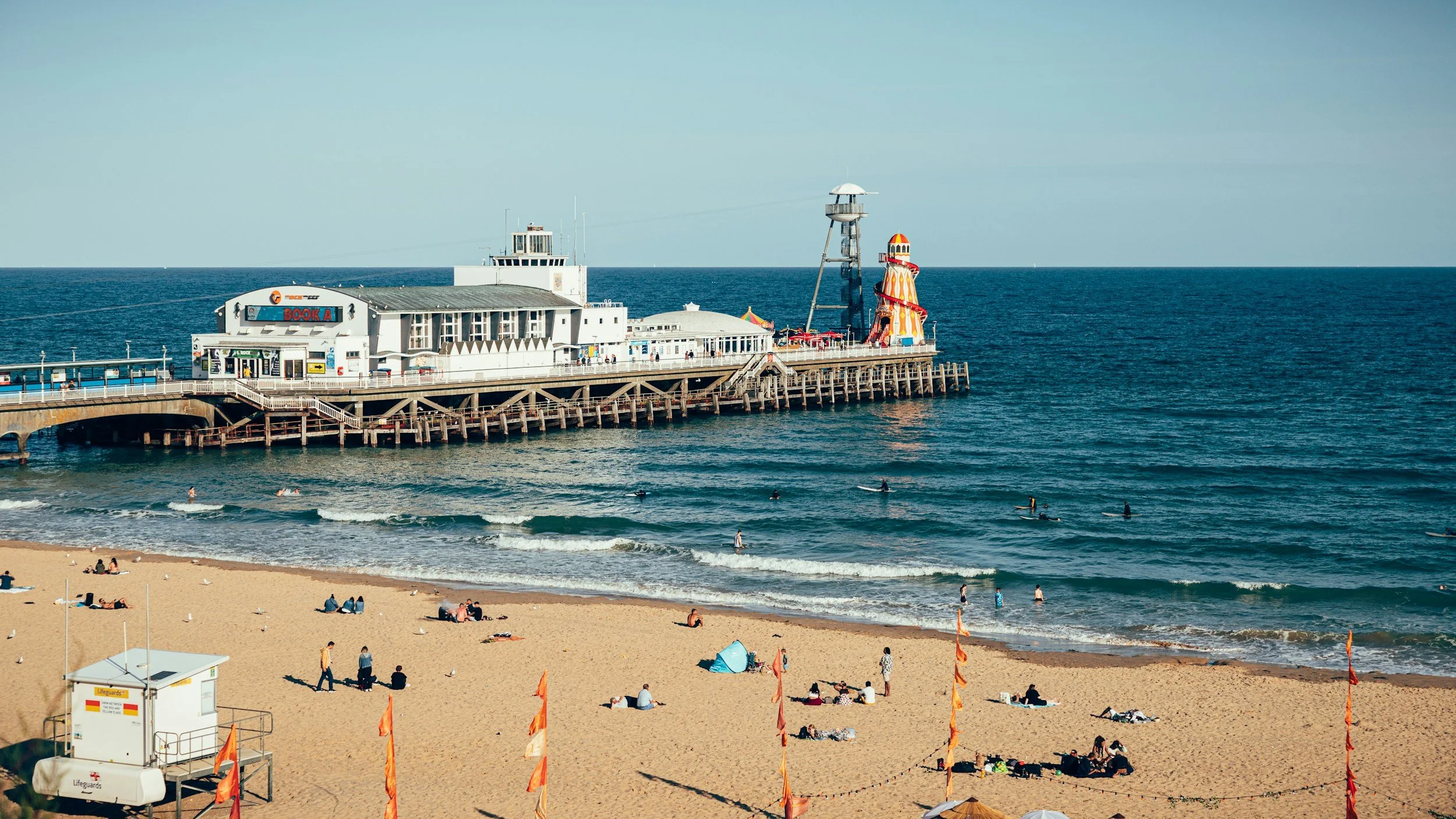
Air conditioning services in bournemouth
Bournemouth's mix of clifftop apartments, Victorian conversions and inter-war family homes all share one thing in common come July: they hold onto heat. We install air conditioning across the town, from the flats above Westbourne's high street to the 1930s semis of Moordown and Queen's Park, fitted by the same engineer from quote to completion.
We install air conditioning across Bournemouth, including Westbourne, Southbourne, Boscombe, Winton, Charminster, Moordown, Queen's Park, Talbot Woods, Pokesdown, Kinson, and the East and West Cliff, covering postcodes BH1 through to BH11 and BH13. Not sure if we cover your street? Get in touch, and we'll let you know.
Why Bournemouth gets hotter than most of the UK
Bournemouth is one of the sunniest places in the country, recording around 1,700 to 1,800 hours of sunshine a year, more than most of inland England. The town's coastal microclimate means winters rarely drop below freezing, but it also means summer heat builds and lingers, helped along by coastal humidity that regularly sits between 80 and 85%. The hottest day ever recorded in Bournemouth was 33.9°C, on 16 August 1947, and in nine years out of ten, both July and August see average daily maximums above 18°C for weeks at a stretch. Humid coastal air makes that heat feel harder to shift indoors than the same temperature would inland.
Source: bournemouthweather climate records, Sunsave 2026 sunniest UK places analysis
0
More UK days above 30°C than in the 1960s
Source: Met Office
0
Surge in UK air conditioning demand during the May 2026 heatwave
Source: Industry market data, May 2026
0
Hottest day ever recorded in Bournemouth (1947)
Source: bournemouthweather.co.uk
0
Average house price — AC costs under 1% of that
Source: Zoopla & Rightmove, 2026
Why Bournemouth's housing retain the heat
Bournemouth has one of the highest proportions of flats to houses of any town in England, many converted from large Victorian and Edwardian villas in Westbourne, Charminster and Winton. Top-floor conversions sitting directly under an original slate roof are especially prone to overheating, with little of the insulation a modern build would have. Further out, the 1920s and 1930s semis of Moordown and Queen's Park were built with solid or partially-filled cavity walls designed to hold heat in through winter, which works just as effectively in reverse come a July heatwave. Clifftop developments along the East and West Cliff bring their own issue, large south and west-facing glazing built to make the most of the sea view, which turns a beautiful outlook into a greenhouse by mid-afternoon.
Source: Surveyor Local and Novello Chartered Surveyors, Bournemouth property surveying guides, 2026
A small cost against the value of your home
The average sold price for a home in Bournemouth currently sits at around £349,000. A single-room air conditioning installation typically costs between £1,500 and £3,000 fitted, working out at under 1% of the average local property value, a genuinely small outlay set against a home worth that much, and one that protects both the building and the people living in it through increasingly hot summers.
Every quote is fixed before work begins, and the engineer who surveys your property is the one who fits the system, whether that's a single unit in a top-floor conversion or a multi-room system in a Moordown semi. We'll always explain what your specific property type means for the install, conversions, period houses and clifftop glazing each bring their own considerations, before any work starts.
FAQ’S
-
In most cases, yes. Converted flats need a bit more thought around where the outdoor unit sits and how pipework runs through a shared building, particularly in leasehold properties, but it's very rarely a barrier. We'll talk you through what's realistic for your specific building at the survey stage.
-
If you're in a leasehold flat, some buildings require freeholder sign-off before an outdoor unit can be fitted. We'd recommend checking your lease or speaking to your management company ahead of booking, so there are no delays once you're ready to go ahead.
-
Coastal air can accelerate wear on outdoor unit casings over time. We fit units suited to coastal conditions and can talk through the right specification for a property directly on or near the seafront.